Tuesday, March 8, 2011

On the Trail West


I’ve Just returned from a trip into the 17th century. I followed the Hale family west from Concord Massachusetts, through West Concord, Maynard to Stow where our line spent two generations before going west again to Leominster, Massachusetts.


I notice from the Historical Marker it was Pompositticut Plantation, a Wampanogue place name. I will have to ask Jessie Little Doe what it means. 1630 was early! Before King Phillips War. I think the Hales waited until that war was over to move west. They only got to Concord in about 1641.


Fourth generation Hales stayed in Leominster, again, for two generations before picking up and going to Windsor, Vermont. Four of the Hale boys returned from fighting in the Revolution went together to take up farms in Windsor.


I’m wondering what these frequent moves to new pastures says about the economic status, restlessness of the Hale Clan. They didn’t stay anywhere long enough to build a financial success that might have entailed an enterprise or a notable house.


I gather they were subsistence farmers. They built wooden houses that for the most part have not survived to present day.


I did see a banner announcing a concert at the Hale School in Stow.


Mostly I was seeking the grave sites of ancestors I knew had lived and died in Stow. I did find quite a few Hales. Fourteen Hale/Healds in the “Lower Village Cemetery,”

It was identified as the oldest Cemetery in Stow.


The second Cemetery I visited was “Hillside Cemetery”. I found four Hales there. One marker resting against a monument gave me pause. It was the head stone for Sally Wetherbee Hale, who died Feb. 26, 1885, AE 74 years 9 mo.. Sally, what was your life like? Did you initial documents, notes, “S.W. H.”?


Saturday, March 5, 2011

Lost Lives, Lost Art


I picked it off the New Books shelf in the Library. I was initially attracted by the cover. It included the famous painting, Gustav Klimt’s picture, “Woman in Gold”.


Lost Lives, Lost Art; by Melissa Muller and Monika Tatzkow.


Now, there is something I know little about. I aspire to be a collector. It has been different things at different times. My endeavors have always been proscribed by the limits of my purse.


There was the BUTTONS phase. Mostly I looked for antique buttons, in sets of at least six. In 1980, before Antiques Road Show there were a lot of buttons to choose from in New England. I used them in my knitting and sewing.


Next came the HAND CROCHETED lace, knitted lace, tatting, islet trim, and antimacassars. Again there used to be a lot of this stuff around before it caught fire. I used it to make linens. Decorate my quilts. I thought about all the women sitting in the evening, before Television, the light coming over their shoulders, fine cotton and crochet needles in their hands churning out yards of this beautiful stuff.


I found someone’s little cloth pattern book for crochet in an Antique shop. Each “page” had samples of the pattern, to be repeated, stitched to the pages.


I carefully examined the collection of lace displayed in the Isabella Stuart Gardner Museum. If Isabella were to appear we would have something to talk about.


I became enamored with beads. If you are traveling it helps ones focus to have something you are looking for. On a trip to Montreal, with my husband, I hit every antique shop in Antique Alley. I did find some treasures, though I didn’t know it at the time.


I found and bought Red Amber, Moonstone trade beads. Then I had to learn how to string beads. I took a four session class in the evening Adult Education.


Lately my tastes have gotten more pricey. Ceramics and oriental rugs. Clearly I have progressed. Time to read about serious collectors.


Hence the book about “Jewish Collectors, Nazi Art Theft, and the Quest for Justice.”


Is this a cautionary tale?


The book details the experience of sixteen collecting Jewish families in Germany, Austria, Czechoslovakia, Poland, Russia.


The stories take on a painful similarity.


There is the initiating person, an artist or someone fascinated by art. Sometimes it is a couple.


They gather a collection brilliant enough to attract public attention. The collections often contain old masters, but most noticeably they begin to build on new styles. Impressionists, Cubists, beautiful wonderful new art.


Enter the Nazis. They denounce this “degenerate” art. However they lust after the collections.


There are a whole host of “co-conspirators”, “friends”, Art Appraisers, Art Dealers, Museum Directors. It becomes a feeding frenzy. It is the functioning of a Criminal State. Laws are passed that result in expropriation. The owners who can escape with their lives do so. Some wait too long, are too old to move and are ruthlessly sent to Concentration camps.


The Stories continue with the heirs attempts to recover the lost art of their Grandparents, Great Uncles, collections.


They are stone walled, forced into court, stymied in every way known to beaurocracys. Some of these stories continue to this day.


Their stories document what Germany and the World lost from WWII, not only the wonderful art but the wonderful people who appreciated and gathered it.

Sunday, February 20, 2011

Station One: Stability

I am beginning to struggle with the signs and symptoms of aging. They are sneaking up on me. More frequent longer naps. A stiff joint here and there. A contracting vocabulary. For a writer this is the most frustrating. I still understand all the words when I hear them but that word I want, the one that most exactly describes my thought, has dropped out of my vocabulary storage. Very frustrating.


Then there is the “loss of interest”. I can’t raise the energy or enthusiasm to get my self to Tufts and the Osher program, Learning in Retirement. I think,

“It’s a hassle getting over there.”

“That last course wasn’t that interesting.”

“ I can learn more from a book.”


I do feel more isolated but I rationalize,

“Only children know how to entertain themselves.”

“I’m never bored with my own company.”


I stopped going to Church about two years ago. There was a bit of a “dust up” over what I felt was the inadequacy of the “Food Bank” for the town, housed in our building. Two local elderly men ran it as a proprietary enterprise. They depended on voluntary contributions to stock the pantry. (Give what you don’t want, don’t need). This modus operandi does not provide a balanced, adequate diet for anyone. I felt it was totally inadequate to sustain the needs of the poor and jobless in our community during the coming economic crisis.


There was a friendly, supportive meeting after church one Sunday. It was a kind of “I’ll stroke your back, you stroke mine”, sort of meeting. I kept asking questions about why the town of Arlington Food Bank was not affiliated with the Greater Boston Food Bank.

The response was,

“They sent us rotten eggs”.

“ We don’t have freezer space to store the meat.”


I wouldn’t back down. I felt like the jobless and needy had my back. I later heard that the Minister had said I was a “trouble maker”. Fine, I thought, I’d stop giving money to the Church and give it to the Greater Boston Food Bank. At that point it seemed more Christian.


So, there went my weekly socialization at Church.


I have my three times a week exercise group where I check in with friends and acquaintances.

I have my sons, their wives and children, close by, praise be.


It takes more time, planning, gearing up for projects, chores, errands. I program each little trip, to the store, library, the grandchildren. No more dashing out the door spontaneously. Make sure you have everything you need. I am brought up short by omissions, loss of sequence.


Going someplace alone makes me anxious though inside, I know I can do it.


My friend Barbara Benes has just given me a book, My Mother, Your Mother by Dennis McCullough, M. D.. I have started to read it and feel like I have stumbled on the road map for the rest of my life. He calls his approach “Slow Medicine”. It is a caring compassionate journey.


I have sent copies to my sons. I recommend it to you and all my friends.


Monday, December 27, 2010

The Failure of Education

The news is full of it. "America's Education System is Failing". The United States ranks twentieth in Science, sixteenth in Math, ad nauseaum.

Why is this so? Why are we failing to keep pace? Why are we falling behind?

My thought is, "Have you no eyes?" "Don't you see the young consumed, anchored, preoccupied, in their hand held devises?" That is where their minds are.

These toys do not teach them to think, concentrate, problem solve. They are all being made Attention Deficit Disordered.

Just at the time when they should be learning to concentrate, pursue a line of thought, struggle with solutions, their minds are elsewhere, in overdrive, distracted.

Wake up people. The affluent society has finally hooked the next generation. They are immersed in the moment, unavailable for the serious task at hand.

Thursday, November 4, 2010

Processing the Pain


Occasionally I wake up in the morning under the spell and sadness of the Gillinghams.


They would appear, after an absence of years and do magical things in your life, while their lives remained a secret, a mystery. Mildred always was private, the submarine woman, her periscope up and her life below the surface, out of sight. They tore at me emotionally because I loved them but could never get my love through the perimeter, to envelope them as I desired.


They were three, James, “Gillie”, Mildred and Peter. I called them my Godparents and Peter used to jokingly call me his “God-sister”. We all shared this unique history of the Yoga Colony, the Clarkstown Country Club, in Nyack, New York.


This history started in about 1925 and lasted for my parents and myself, until 1938. The Gillinghams had left earlier and settled in California, Alameda.


Aunt Mildred was a namedropper and I remember “Dan Dana” being mentioned. I felt that they went because there were more glamorous, important people out there.


Our lives intersected on the Gillingham timetable. The first episode was on their little ranch in Canelo Arizona, 1938-39. Next was in Arizona in 1948. Aunt Mildred waved her magic wand and got me a three-year scholarship to Verde Valley School. She convinced my future husband’s parents to send him as well.


Our lives went their separate ways. Peter would appear on my screen periodically; news of his marriage to the “beautiful and talented Molly Scott” from Aunt Mildred; his Graduation from Yale Law School, his work for the Government.


Some times the contacts seemed unreal. My husband, who was a tenured professor at MIT recounted Peter’s suggestion that he, Ken, return to Canelo and dig up this giant bird, and make a name for himself. My mother’s response to this was, “Gillie was always looking for buried treasure.”


Earlier, after college graduation Peter, who had been studying Russian at the Army Language Training School, told Ken that


“They wanted to operate on my eyes, to make them look Asian, and drop me behind enemy lines in Russia.”


Peter’s name appeared as the Director of the new program of Viet Namese Studies at Carbondale, Illinois. Ken and I were actively opposing the Viet Nam War at this point and I knew some of the history of this program, which major universities had refused to host. We thought it tainted and began to wonder if Peter had a CIA connection. I wrote him a long, disparaging letter giving our views on the whole Viet Nam involvement, asking, “how can you be involved with this illegal and immoral war?” I didn’t get an answer then but later he said,


“We knew the Tet Offensive was coming and warned the Military but they didn’t accept our analysis.”


I thought the “we” was an oblique acknowledgement of his CIA status.


In 1989 I visited Nyack and had lunch with Viola Bernard, a former “club” member and then a Psychiatrist, practicing in New York City. I was working as a Psychiatric Nurse at that time. We were recounting what we knew of former Club members, and the Gillinghams came up. Viola said,


“Mildred asked me to see Peter. I did. He was crazy.”


She then looked uncomfortable, realizing that she had violated his confidentiality.


The last time I saw Peter he drove across the country in a pick up truck to wish my mother a Happy Birthday in her 100th year. It would have been 1995. He stayed with us in Lexington. I remember being struck by him having his own bottle of Scotch along. He brought it in from his truck then took it with him when he left. I thought, “I wonder if he has a problem with alcohol?”


I next heard he had died. He checked himself into the VA Hospital, in the process of a stroke, and it had taken his family ten days to find him.


I was crying and crying. Couldn’t believe he was gone.


Some five or six years ago I had reason to go to Portland Oregon. I remembered Peter saying his son, Ian, lived there. I looked him up, found him, and went to dinner with him, his wife and her parents.

I realized they knew very little of the Gillingham family history, victims of the family style. I recounted what I remembered and enjoyed seeing their interest and surprise.

Ian recounted the sad history of his father's decline. It seemed that all the things that were of Peter got distorted, inflated, out of control. That was hard to hear.

Thursday, October 14, 2010

Visit to Hyde Park


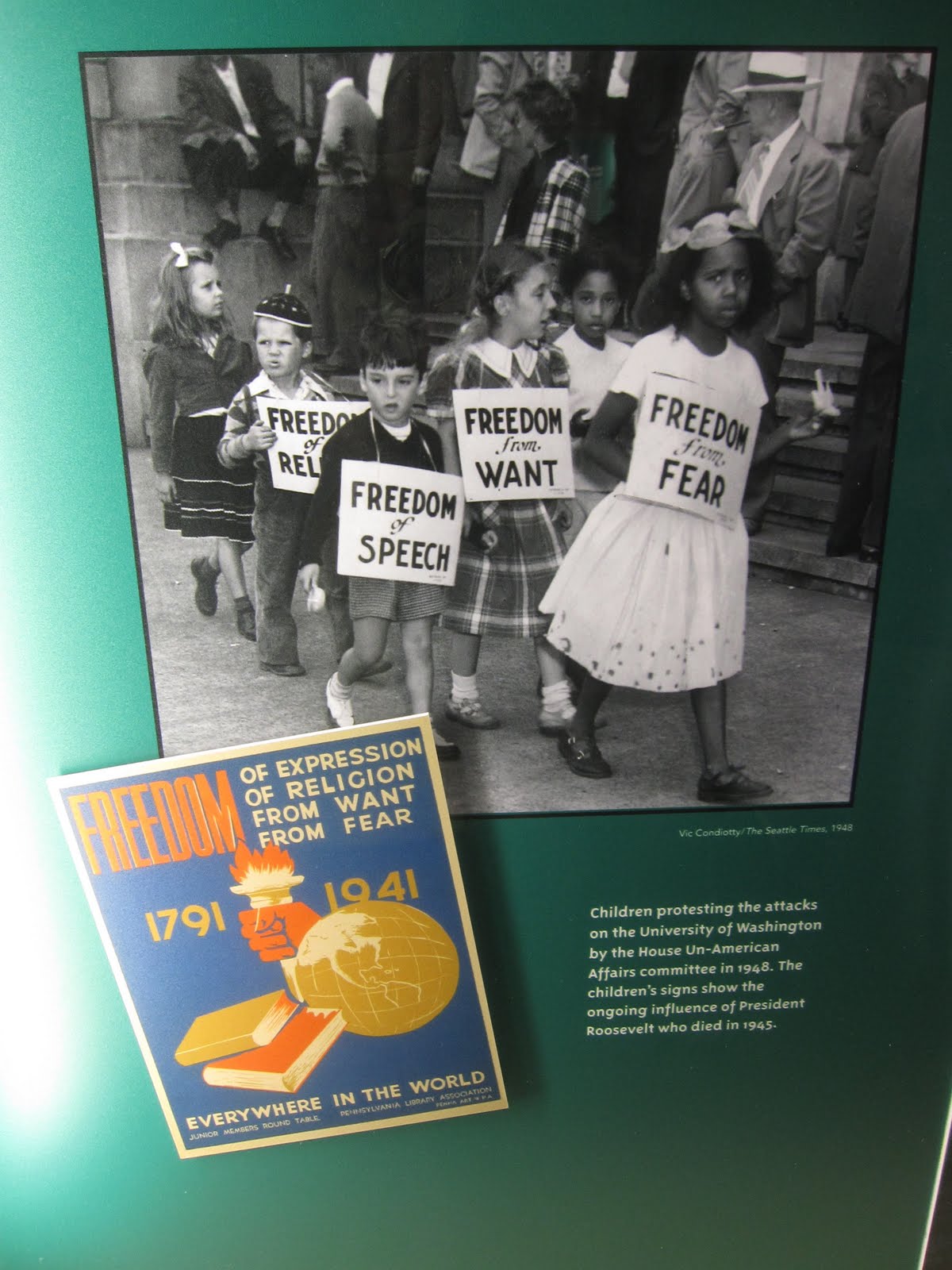
I have just returned from a visit with my friend, Doris Powell, to Hyde Park for the re-dedication of Franklin Roosevelt High School. Doris, "Coxie" was a member of the first graduating class. Seven members of the class survive and five made it to the ceremony.

The ceremony at the re-dedication of the Roosevelt School was very lovely and appropriate. David Roosevelt, Elliot's son, spoke. It was full of meaning for the community and the emphasis on education, supported by both Franklin and Eleanor. The school building has been placed on the list of National Historic Places.

The next day I got up early and went to Valkill, Eleanor's private place. What a beautiful spot. She and two of her friends had built a stone cottage there. Franklin had given them life tenancy on the land. It is the place you see pictured. Eleanor didn't live there. She visited and she and the two friends started a furniture factory right there to train local people and give them work during the depression. It went broke on 1936, Eleanor said she was their main customer, so she closed it and rebuilt it for a residence for herself. it is spacious but modest.

Eleanor lived mostly in one wing, LR, DR, Kitchen, secretary's small apartment down stairs and her bed room, sleeping porch, two guest rooms up stairs. The park service is refurbishing it as it was during her tenancy. John, her son, had given or sold the contents at auction when she died. Luckily the local museum had come and taken pictures of the rooms and they had the records of who had purchased what at the auction. The Park service is tracking things down.

Ken Burns has just completed shooting for a film on the Roosevelts and the Ranger said he came up with a number of pieces. The film will be out in about two years so I'll look for it. I loved his film on Mark Twain.

Saturday, September 25, 2010

Being Ken's Wife


Someone has emailed Ezra and wants to know what it was like to live with Ken Hale.


This inquiry has gotten me thinking.

It must be different to live your life with someone who has a special gift, has a unique ability, recognized by the people with whom he interacts.


I think my realization came gradually because I had known Ken since we were quite young, he twelve and I fourteen. Initially I was attracted to him because I thought him handsome. His special interest just seemed part of him. He was also interested in Gun Smithing and Trapping. So I just thought, "that is who he is."

He seemed very attracted to me and was always there and available as a boyfriend whenever our lives intersected.


He once said to me, “Why did you choose me?”

I said, “No bad vibes.”

He was very hurt by this but I think he didn’t realize how many men there were out there with serious flaws, from a woman’s point of view.


We kind of grew up, went through life, and were separated by death. I’ve had a few dreams about him since he died and feel they are insights into our relationship.


About two weeks after Ken’s death I dreamed I came into our bed room and he was standing on his side of the bed in his robe that I had made him.

He said, “I’m sorry”.

I threw my arms around him and hugged him and said,

“I miss you so.” And he was gone.


5/21/04: I dreamed Ken rode up on a bicycle and dismounted. I threw my arms around him and kissed and kissed him on his cheek.

I said, “I’m so lonely, stay with me.”

He said, “I can’t” and disappeared.


5/16/08 I dreamed I was in a Market and realized I didn’t have the car keys to get myself home.

I started calling, “Ken, Ken”. And was distressed at how weak, and feeble my voice sounded.

I tried to call louder, younger. I saw Ken coming toward me wearing a shirt he had of red and white plaid. He was pushing a grocery cart and alternately smiling and looking concerned.

I thought, “There he is. He will get me home.”


I think living with a Polyglot concerns two Domains: one is the Language Gift and the other Personality.

I remember reading J. P. Harrington’s wife’s autobiography with a lot of interest even before I thought of myself as being married to someone with language phenomena.


Her book was titled; Encounter with an Angry God. Now here was a linguist, gifted, who was incredibly difficult. I’ve since learned that he must have been paranoid. He hid his notes and manuscripts in many different places and some were never found.


I realized pretty early in our marriage that Ken had just one interest, languages; all languages. He never ranked them as worthy of study. He did acknowledge that some were more “difficult” to learn than others. (Navajo, Gaelic, Basque).


I think my support of his interest first evolved around my realization that this was how he was going to support us financially. That language work was what he was suited for and what he wanted to do and that teaching this interest could bring in an adequate salary.


As the wife in this marriage it was my obligation to help him succeed in this profession.

This support from me meant going where he wanted to go and freeing him up to do his work while I did the rest, the household, entertaining, finances, children in the family.


This division of labor worked well for us. He worked hard, was successful professionally earned an adequate income for our needs and didn’t second guess my decisions about family matters. I did realize that this gave him what he wanted, time to do his “work”. He did show some initial irritation when I would ask for help that took him away from his work. Usually he would stop what he was doing and “get it over with so that I can get back to work”.

He would do the requested task willingly after expressing the initial irritation with the interruption.


The parts of Ken that I admired were his generosity, his ability to have a unique window into other cultures through their languages. He was a strong and articulate advocate.

Often he was reluctant to defend him self but he would become a Gladiator for the down trodden minority ( Native Americans, Australian Aborigines, indigenous remnant tribes of Nicaragua ) faced with a voracious majority.


I admired his willingness to share his materials and insights. He felt there was such a wealth of language and grammar in the world that he could never do everything he wanted to do in his lifetime.

“I’ve got to interest other people in working on this.” (problem)


In thinking about the existence of God, he said, “I think if there is evidence of the existence of God it is Grammar.”

I think he was puzzled by my lack of interest in Languages. I remember him trying to interest me by saying, “Each new language is like a mystery to be solved.”


He was strongly opposed to the death penalty.

He said, “Imagine being the poor person who everyone wants to die, how alone you would feel.”

That gave me pause and I have felt that I should support his insight.


Before Ken died I said to him:

“I’m going to miss you.”

“I’ll always be around you.”

“If I move will you be able to find me?”

“I have tricks.”


September 23, 2010,

I am missing Ken a lot today. Thinking how time stopped for him and continued for me. I feel like I left him, back there, somewhere, alone.

I remember before he died, when he was unable to leave our room he said, “I’m afraid you are going to go off and leave me here ( abandon me ).”

It seemed such a logical understandable fear. It was the first time he could not physically follow me. I said everything I could think of to reassure him.

“I wouldn’t leave you for anything.”

“I’m not going anywhere.”


September 25, 2010

I am remembering that about one month before he died, when he was pretty much bed bound, I decided to wash Ken’s feet.

I spread the towel on the floor and had him sit on the side of the bed. I brought a large plastic basin (the one I used to make bread in) filled with warm water. I placed his feet in the water to soak then soaped them up and rubbed of the old skin. I dried each one then cut his toenails. We finished up with baby powder.

I remember how he smiled and how pleased he looked. He deeply enjoyed the loving personal touch. I’m so glad I did it and have this memory.